Observe with care
Found a young wild animal alone? Pause and observe
A small animal by itself can look like it needs rescuing. Sometimes a parent is nearby or the youngster is at a normal stage of development. But the right response varies widely among species, so a single rule cannot cover a fledgling bird, a fox cub and a hedgehog.
Quick answer
A young animal alone is not enough to tell whether it needs help. Keep pets away, watch quietly from a distance, and consult current species-specific local advice; contact qualified wildlife help if you can see injury, illness or immediate danger.
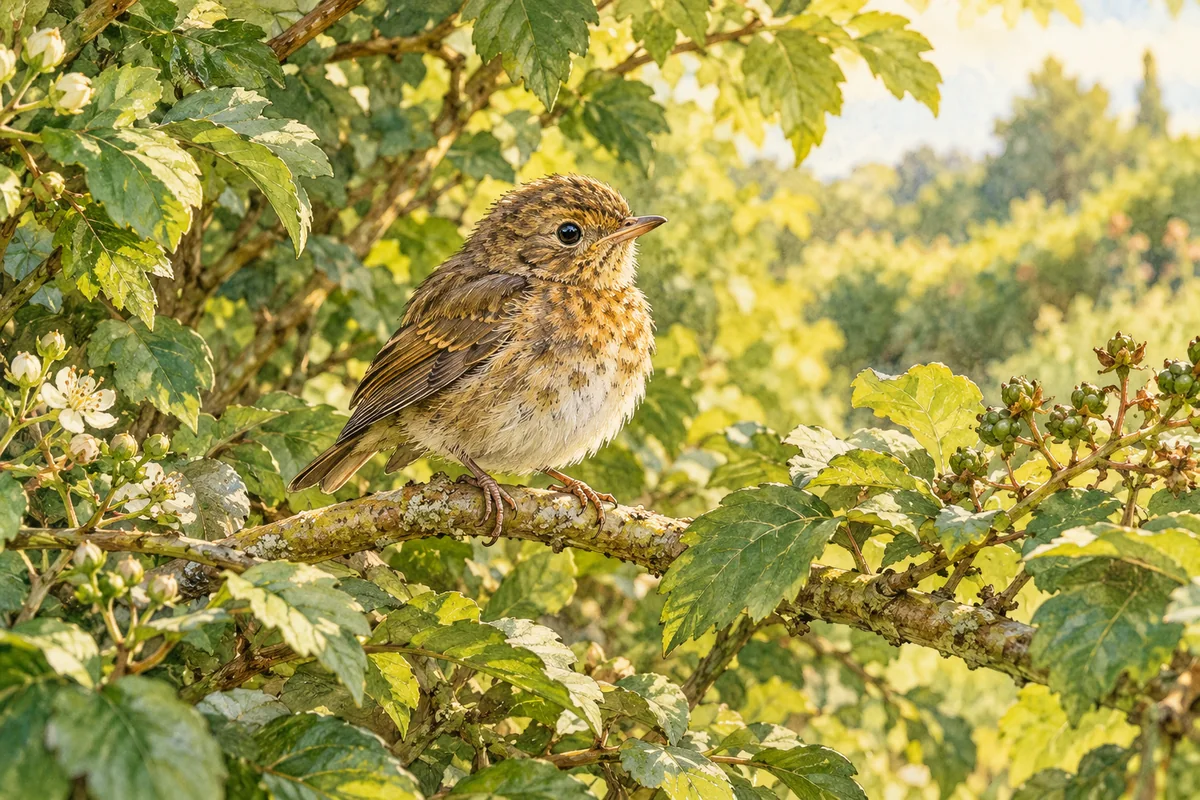
First, pause and keep your distance
The RSPCA’s UK guidance says young wild animals in a safe place are often best left undisturbed while observed from afar; a parent may be nearby even when you cannot see it. Keep cats and dogs away, and do not touch or carry an animal just because it is alone.
Being alone does not tell you whether an animal is well, orphaned or in need of intervention. Look only for what is plainly visible, such as an injury, illness or immediate danger. For those concerns, contact a local wildlife rescue centre or veterinary professional rather than trying to diagnose from appearance.
Birds need different advice at different stages
For many common garden birds, a fully feathered fledgling may be on the ground while learning to fly. The RSPCA’s current UK page generally advises leaving fledglings undisturbed, keeping pets away and monitoring from a distance. Its guidance notes that parents may be nearby, but their absence from view does not establish that a young bird is orphaned.
Do not apply this example to every bird or country. The RSPCA lists separate advice for gulls, swifts, swallows, waterfowl, corvids and birds of prey, and says some birds do not nest or fledge in the familiar way. Check the current advice for the species and place; current disease guidance may also affect whether contact is appropriate.
A careful fledgling example
Suppose you notice a fully feathered young bird hopping beneath a hedge. Keep pets away and watch from a distance; do not pick it up or move it based on this general example. The RSPCA’s page gives species-specific UK advice, so check that current guidance if you are unsure what you are seeing.
If the bird is visibly injured or ill, or is in immediate danger, contact a qualified local wildlife rescue service or veterinary professional for instructions. Do not apply a general timer or use a photo-based impression as a test for orphaning; follow any observation period included in the current species-specific guidance. The guidance here cannot determine an individual bird’s condition.
Record evidence without disturbing the animal
If you need to ask for help, note where the animal is, what you can plainly see and what happened while you watched from a distance. Keep back, reduce noise and avoid gathering a crowd. Use factual language such as “fully feathered young bird on lawn; hopping; no injury visible from here” rather than concluding “orphaned” or “healthy.”
Do not offer food or water or attempt care unless qualified local advice specifically tells you what to do. Young animals differ, and the appropriate response depends on species, condition and location. Follow current guidance from the relevant wildlife authority or rehabilitator.
Sources: RSPCA: Injured Wild Animals—Helping UK Wildlife · RSPCA: Found a baby bird out of a nest
When to seek qualified help
Contact a local wildlife rescue or veterinarian when you can see an injury or signs of illness, or when the animal is in immediate danger. Describe only what you observed and ask for species- and location-specific instructions before intervening. In the UK, consult the relevant current RSPCA page; elsewhere, use the local wildlife authority or rehabilitation service.
A photograph cannot diagnose an animal or establish that it has been abandoned. If you are unsure, keep your distance, keep pets away and seek qualified advice rather than applying a universal rescue rule.
Sources: RSPCA: Injured Wild Animals—Helping UK Wildlife · RSPCA: Found a baby bird out of a nest
Before you intervene
| Check | Careful next step |
|---|---|
| Does it look injured or ill? | Contact a local wildlife rescue or veterinarian. |
| Is it in immediate danger? | Follow local species-specific advice; avoid unnecessary handling. |
| Could a parent be nearby? | Watch quietly from a distance and keep pets away. |
| Do you know the species? | Look up guidance for that animal; do not generalize from birds to mammals. |
- Check
- Does it look injured or ill?
- Careful next step
- Contact a local wildlife rescue or veterinarian.
- Check
- Is it in immediate danger?
- Careful next step
- Follow local species-specific advice; avoid unnecessary handling.
- Check
- Could a parent be nearby?
- Careful next step
- Watch quietly from a distance and keep pets away.
- Check
- Do you know the species?
- Careful next step
- Look up guidance for that animal; do not generalize from birds to mammals.
Takeaways
- A young animal alone does not reveal whether it needs help.
- For fledglings, follow current species- and location-specific guidance, including any observation steps it recommends.
- Keep pets away and ask qualified local wildlife help about visible injury, illness or immediate danger.
Sources and further reading
Sources checked 17 Oct 2026.
Have a photo of your own?
Choose a photo on Home and select Analyze — your photo is sent only when you ask for the analysis.
Discover an animal