Observe with care
Observe backyard wildlife without disturbing it
A backyard can feel ordinary until you stop and watch for a few minutes. Birds cross the same fence, insects visit flowers and small changes happen around plants and soil. You can learn a lot from a still view, especially when you let wildlife continue its routine.
Quick answer
Choose a safe place where you have permission, then quietly watch a small view such as a hedge, flower bed or fence line. Notice the routines wildlife follows without approaching, handling or feeding it; a window can be a good observation spot.
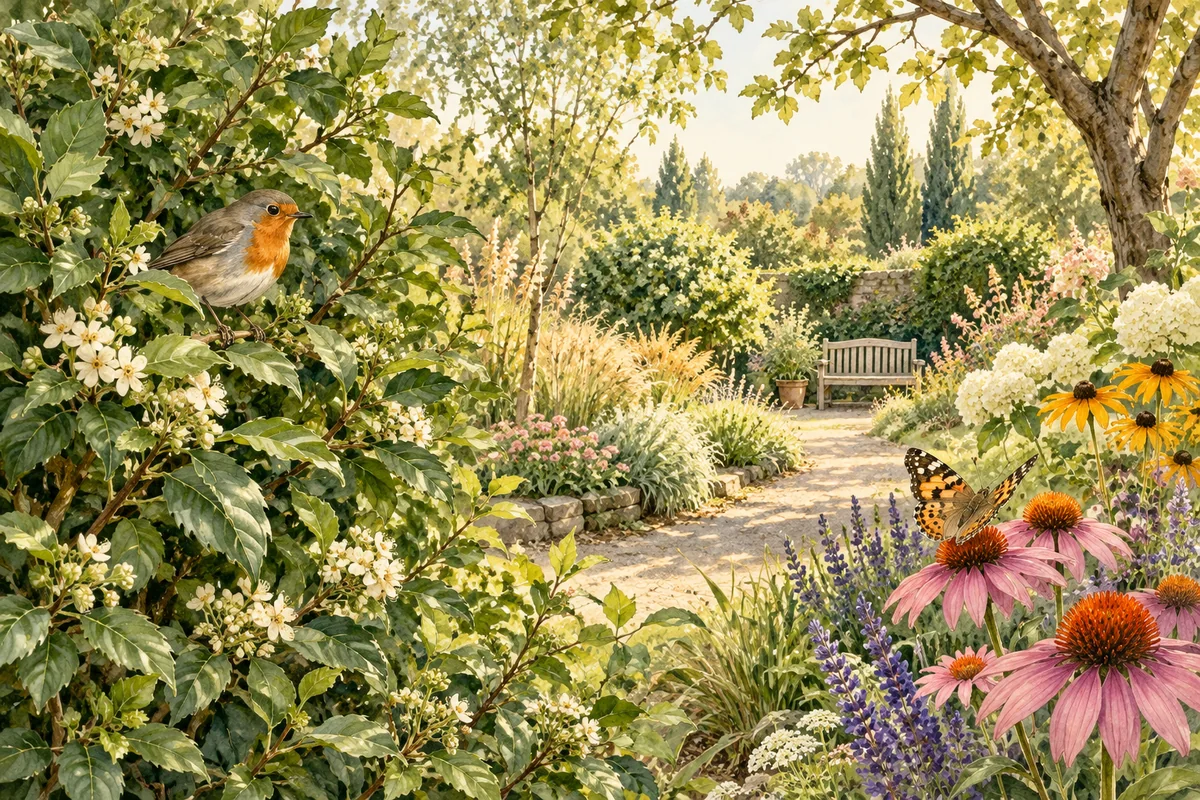
Choose a small, comfortable spot
The RSPB suggests watching birds from a window, garden or suitable local green space. Its activity recommends choosing a safe place where you have permission to be. The U.S. National Park Service’s Backyard Explorer exercise offers another simple idea: sit in one spot for five minutes and observe the surroundings.
Pick somewhere you can stay still without blocking a route or leaning over a nest. A window, porch or garden chair can give you a quiet view. If you go to a park or shared space, follow its signs and access rules.
Sources: RSPB: Go birdwatching · NPS Mammoth Cave: Backyard Explorer
Let quiet do the work
Sit still and lower your voice. The RSPB notes that getting quiet can help you see birds more clearly and hear calls. You do not need to chase an animal for a better look. Binoculars can help from where you are, but ordinary observation is enough to begin.
If wildlife changes what it is doing because you are nearby, give it more room. Do not approach a nest or gather around an animal. Quiet watching is about letting the moment unfold, not turning your yard into a stage.
Sources: RSPB: Go birdwatching · U.S. National Park Service: 7 Ways to Safely Watch Wildlife
Notice more than the animal’s name
Follow ordinary activity in one part of the yard: which route a bird takes along a fence, which flowers insects visit, or when movement appears near a hedge. Notice the setting as well as the animal, and leave sounds or uncertain identities unnamed when you cannot tell what made them.
A quick mental comparison across the morning can help you notice routine: what is busy, quiet or changing? Keep attention on the place and what animals choose to do, rather than turning the visit into an identification exercise.
Sources: NPS Mammoth Cave: Backyard Explorer · NPS Rocky Mountain: Junior Ranger Journal/Nature Sketchbook
Follow one familiar route
Choose a view you can observe without moving closer: a fence line, the edge of a lawn or a flowering pot. Watch for one routine, such as a bird crossing the same gap or insects visiting the same patch. If nothing appears, simply notice the weather, light and plants in that view.
For example, from a kitchen window you might notice a blackbird pause beneath the hedge before hopping to the fence. The useful backyard question is “what happens here in an ordinary moment?” A separate nature journal can hold dated notes, sketches and questions if you want to preserve the detail.
Sources: NPS Mammoth Cave: Backyard Explorer · NPS Rocky Mountain: Junior Ranger Journal/Nature Sketchbook
Leave the habitat as you found it
Watch from the edge of a space rather than moving logs, leaves or nesting material to uncover what may be hiding. Avoid feeding animals for a closer view, and keep pets away from young wildlife. The NPS advises giving animals room and moving back when they react; a backyard is not exempt from the need for care.
This activity is for reader-side observation. It does not submit sightings or identify every species. If you want to make a formal wildlife record, check an appropriate local recording scheme and its instructions. For everyday learning, a few accurate notes are enough.
Sources: U.S. National Park Service: 7 Ways to Safely Watch Wildlife · U.S. National Park Service: Don't Feed Wildlife · RSPCA: Injured Wild Animals—Helping UK Wildlife
A five-minute backyard observation
- Choose one safe spot where you have permission to sit.
- Stay quiet and still for five minutes.
- Record one sound, one movement and one detail in the scene.
- Sketch the view and label uncertain identifications as possibilities.
Takeaways
- A window or quiet seat can be a good place to begin.
- Write what you saw and heard before guessing what it means.
- Do not approach, feed or rearrange habitat to create a better view.
Sources and further reading
Sources checked 17 Oct 2026.
Have a photo of your own?
Choose a photo on Home and select Analyze — your photo is sent only when you ask for the analysis.
Discover an animal